
Physical Address Crucial–Even When It’s Not Yours
I was doing a search yesterday for the date of the John Mayer concert in Calgary. Now instead of going to Ticketmaster I figured I’d check what Google had to say. Who knows, maybe they’d do some cool result like they do when you ask for metric to imperial conversion with numbers (answer displayed at the top of the results). I typed in the query ‘John Mayer Calgary’ and was a bit surprised with the results. Have you noticed this?
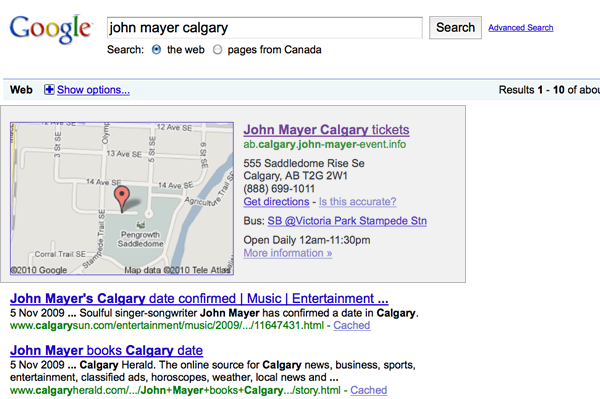
Check out what the results displayed. A local result complete with a map to tell me where the event was going to be held. That’s cool but I was curious to know WHO got that listing. Upon closer inspection it was a ticket reseller–essentially a glorified online ticket scalper.
Fair enough (OK maybe they aren’t fair), but still I wanted to know HOW they were ranked. So I took a closer look.
Turns out this particular web site was running a frame within their page and had carefully constructed meta tags.
According to Google TOC frames aren’t properly understood by the search engine spider–the content can’t be seen. Yet here was this web page ranking number one for an upcoming concert. The reason why is they were VERY crafty on how they were creating each page (which is replicated for thousands of concerts).
Firstly they ensured that the content that the search engine spiders COULD see was specific on the concert and location complete with FULL concert address. The web site is in no way affiliated with the locations, but the full address coupled with the event in the title gave the web site TOP placement in Google search (complete with map).
After that they wrote a piece of script to call an iframe up with the correlating concert ticket information. Pretty clever.
Goes to show that you need to maximize your local results and insert your complete business details including address to help you rank for local searches.